Etel Adnan, a Remarkable Woman

Etel Adnan was born in 1925 and raised in Beirut, Lebanon. Her mother was a Greek from Smyrna, her father, a high ranking Ottoman officer born in Damascus. In Lebanon, she was educated in French schools.

She studied philosophy at the Sorbonne, Paris. In January 1955 she went to the United States to pursue post-graduate studies in philosophy at U.C. Berkeley, and Harvard. From 1958 to 1972, she taught philosophy at Dominican College of San Rafael, California.

Based on her feelings of connection to, and solidarity with the Algerian war of independence, she began to resist the political implications of writing in French and shifted the focus of her creative expression to visual art. She became a painter. But it was with her participation in the poets’ movement against the war in Vietnam that she began to write poems and became, in her words, “an American poet”.

In 1972, she moved back to Beirut and worked as cultural editor for two daily newspapers—first for Al Safa, then for L’Orient le Jour. She stayed in Lebanon until 1976.

In 1977, her novel Sitt Marie-Rose was published in Paris, and won the “France-Pays Arabes” award. This novel has been translated into more than 10 languages, and was to have an immense influence, becoming a classic of War Literature. In 1977, Adnan re-established herself in California, making Sausalito her home, with frequent stays in Paris.

In the late seventies, she wrote texts for two documentaries made by Jocelyne Saab, on the civil war in Lebanon, which were shown on French television as well as in Europe and Japan.

Extract, the website of Etel Adnan 

Searching for information about Etel Adnan also led me into an interesting world that left me wanting to stay and read a while.  And there was another book too, Sea and Fog.

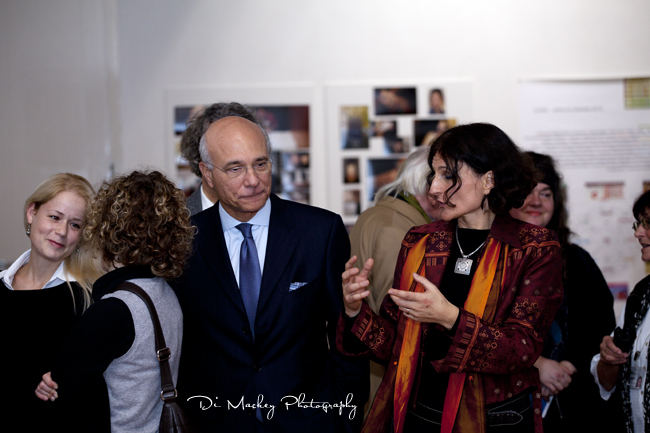
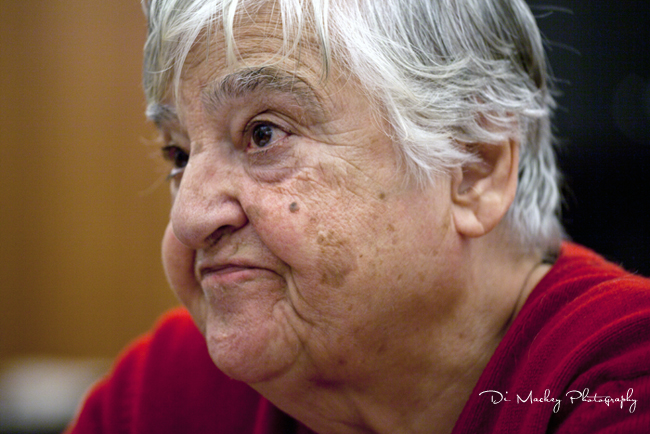
I took this photograph of her at the TASWIR Exhibition.  I was off to one side, taking photographs while she was interviewed.

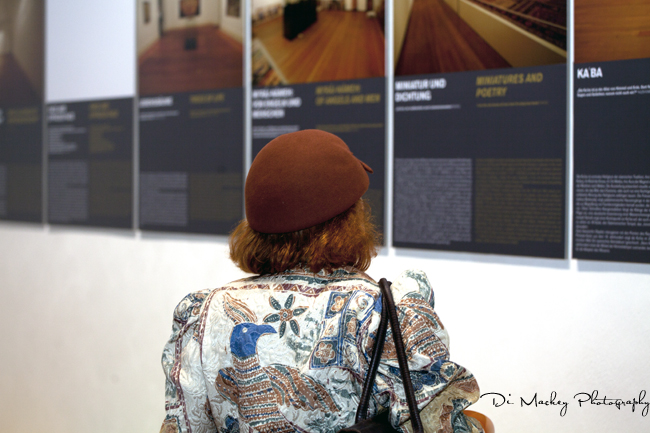
My camera was filled with interesting people during those months on the project.
A little more on documentary photography

I wanted to come back to documentary photography once more and just say, never stop watching.  For me, it's a little like hunting ... perhaps. 

I don't go in with a plan beyond the attempt to capture the story.  To tell it true.  I picked up a 3-day documentary shoot, over on Flanders Fields, working with the New Zealanders a few years ago.

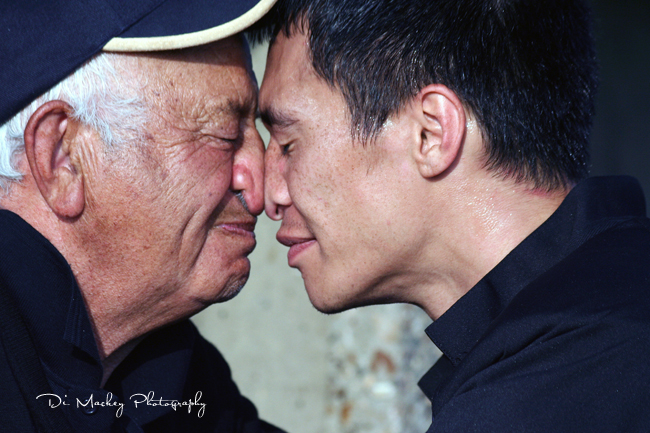
The image that follows is one of my favourites and I have to confess, it really was about swinging round and capturing this exquisite moment without thinking too much about settings.  A hongi ... a Maori greeting, was being exchanged. 

I had been traveling in France with the New Zealand veterans the day before and so they knew me a little. The New Zealand London Rugby Club were playing a commemoration match in Zonnebeke. 

Moments like these make documentary photography a big love of mine ...


On Documentary Photography ...

Her photographic work is magnificent and I love her presence: her portraits are stunning, they expose intimacy, humor, and pensiveness; her photographs capture the space, the movement, human interaction deliciously, in a way that one feels invited to an event long after it disappeared from the public scene.

In all her unobtrusiveness when working with the camera, Di is great fun to hang out with, the artists, scholars, thinkers, curators of our Berlin exhibition highly appreciated her, and when working together in Cairo, Istanbul, Berlin, or wherever else, I enjoy her kindness, humor, and delightful presence.

Shulamit Bruckstein, Curator, director of TASWIR projects / ha’atelier

Shulamit wrote this after a series of projects together and, in so many ways, lays out what I want to achieve as a documentary photographer.

I believe I need to be unobtrusive, invisible ... disappearing into the moment I have been asked to capture.  At the same time I believe that there are going to be people I need to engage with.  It's about building trust, if there's time.  It's about being respectful - I want people to enjoy my work afterwards. 

I prefer to wear dark clothes and quiet shoes.  I carry cough drops and tissues.  Nothing about me should stand out or distract people from the event.  I don't make eye contact when I move around ... unless I need to or unless I find a 'favourite'.  A favourite is someone who embodies something of atmosphere ... the event.  And there is always someone.

I love my flash.  It's a Canon Speedlite 580EX II and over the years we've become good friends.  I know how to twist and turn it, to bounce light and avoid shadows.  I work with my favourite lens most of the time, a  Canon EF 70-200mm 1:4L.  Some people get hung up on the latest equipment but I simply love whatever works for me.  This lens is my baby.  Attached to my Canon 5D Mk II ... it's magic.

I prefer to zoom because it allows me to stand back, on the edges, while still getting up close and personal without people realising that it's all about them.

Documentary photography ... unobtrusiveness, respect, the building of trust, connections, communication.  It's all of that and more.  I love it.

I found the words ...

I believe that our way of 'seeing' the world is as unique as our fingerprint. I believe that the technical elements of photography are simpler than most people realise. With this in mind, I am offering photography workshops, women only.

You will receive a pre-course workbook that invites you to explore and come to know your camera via a series of simple exercises, with virtual assistance from me, if necessary. Then we come together, one-on-one or as part of a very small group, to put those new skills into practice out in the city, to create images that reflect your way of seeing and experiencing the world, and to develop your confidence with your camera.

Contact me.

Photographing People

I've been preparing for the photography workshop in Genova, thinking about all the things I know ... and finding stuff I didn't realise I knew.

When I make notes on portraiture, I include words like Trust and Respect.  Empathy.  Patience.  Engagement. Authenticity.

And it's not about acting or demanding or insisting.

People, when they're being photographed, are often fragile. They feel broken open, exposed, vulnerable.

You're asking them to show a little of their souls, to give you themselves in a relaxed state of being.

People often tell me they photograph badly but no, I think no one 'photographs badly'. I have this theory that it is a failure on the part of the photographer, to relax their client.  To engage.  To earn their trust.

When I work on a portrait shoot, I am almost skinless.  I don't want to be the boss, to be in control, to demand this expression, that pose, this place.

I want to go someplace my client loves.  A space where they can relax and feel comfortable.  I want to talk, and maybe walk a little.  I want to know who they are and how they want to be perceived.   I want to discover and capture their best selves.  The self they know and recognise. 

Sometimes, if it's a family portrait, I have asked the mum for a follow-up shoot alone because when you're a mum and a wife on a family shoot, you can miss out on being you.  Your own private individual you ... before you took on all those roles.

And it works.  I have photographed some beautiful strong confident women when they're off-duty as everything else.

Kids are something else again.  You need to engage, it needs to be fun, you need to be real.  They will know.  Bubbles have saved many a shoot when a child has grown bored or tired. 

Portraiture is all about a lot of things ... and then relaxing and enjoying that time spent together.  It's about gifting someone the beautiful things in them, and everyone has something.